
Gummy candy has become one of the most popular confectionery products in many global markets. Consumers of different ages enjoy gummies because they have bright colors, fun shapes, soft textures, and many flavor choices. From fruit gummies to vitamin-style gummies, this product category continues to grow in supermarkets, convenience stores, and online channels.
At CSsweet, we understand that gummy production is not only about making sweet products. A successful gummy candy requires careful control of ingredients, production steps, machines, and quality checks. As a gummy candy manufacturer, we help international buyers create products that match their market needs, including custom shapes, flavors, colors, and packaging solutions.
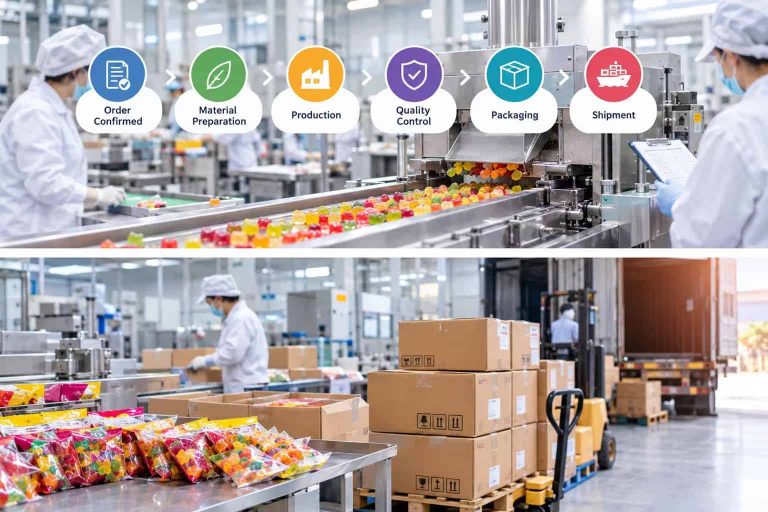
Many buyers want to know how gummy candy is made in a factory before they place large orders. The manufacturing process includes several important stages, from ingredient preparation to final packaging. Each step affects the taste, texture, appearance, and shelf life of the gummies.
This article explains how factories produce gummy candy and how manufacturers control each stage to deliver stable and high-quality products.
What Ingredients Are Used to Make Gummies?
Gummy candy starts with a carefully selected combination of ingredients. Each ingredient has a specific role in creating the final texture, flavor, and appearance. Manufacturers adjust ingredient ratios based on the type of gummy product they want to produce.
Different markets may also require different formulas. For example, some customers prefer traditional gelatin gummies because they provide a soft and elastic texture. Other customers choose pectin gummies because they are plant-based and suitable for vegan consumers.
At CSsweet, we select ingredients based on customer requirements, target markets, and product positioning. Our team studies each formula carefully because small changes in ingredients can affect the final gummy quality.
What Are the Main Ingredients in Gummy Candy?
The main ingredients in gummies usually include gelling agents, sweeteners, flavors, colors, and other functional ingredients.
| Ingredient | Main Function | Common Options |
| Gelling agent | Creates gummy texture and firmness | Gelatin, pectin, agar |
| Sweetener | Provides sweetness and body | Sugar, glucose syrup, maltitol |
| Flavor | Creates taste experience | Fruit flavors, mint, yogurt flavors |
| Coloring agent | Creates attractive appearance | Natural colors, food colors |
| Acid regulator | Controls sourness and texture | Citric acid, malic acid |
| Coating materials | Improves surface quality | Oil, wax, sugar coating |
How Do Gelling Agents Affect Gummy Texture?
The gelling agent is one of the most important ingredients in gummy production. It decides how soft, chewy, and elastic the gummy will be.
Gelatin is one of the most commonly used materials in traditional gummy manufacturing. It creates a strong chew and smooth mouthfeel. Many classic gummy bears and fruit gummies use gelatin because consumers are familiar with this texture.
Pectin is another popular choice. It comes from plants and works well for customers who want vegetarian or vegan-friendly gummies. Pectin gummies usually have a shorter bite and a slightly different texture compared with gelatin gummies.
Manufacturers need to control temperature and processing time carefully when using different gelling agents. If the formula is not balanced, gummies may become too hard, too soft, sticky, or unstable during storage.
What Sweeteners Are Used in Gummy Production?
Sweeteners provide the basic sweetness of gummies and also influence texture. Sugar and glucose syrup are traditional choices because they create a balanced taste and stable structure.
Some brands choose alternative sweeteners to meet special market demands. For example, sugar-free gummies may use maltitol, sorbitol, or other sugar substitutes. These ingredients allow manufacturers to create lower-sugar products while maintaining a pleasant taste.
However, manufacturers must carefully adjust the formula because different sweeteners have different effects on moisture and shelf life.
| Sweetener Type | Advantages | Common Market Use |
| Sugar | Classic taste and stable texture | Traditional gummy candy |
| Glucose syrup | Improves softness and prevents crystallization | Most gummy products |
| Maltitol | Suitable for reduced sugar products | Health-focused markets |
| Sorbitol | Helps maintain moisture | Special formula gummies |
How Are Flavors and Colors Added to Gummies?
Flavor and color create the first impression of gummy candy. Bright colors and attractive flavors help products stand out on retail shelves.
Manufacturers usually add fruit flavors such as strawberry, orange, apple, grape, and mango. Some markets also prefer unique flavors like cola, yogurt, watermelon, or mixed berries.
Colors can come from natural sources or approved food colors. Many international buyers now request natural coloring because consumers are paying more attention to clean-label products.
At CSsweet, we work with customers to develop flavor combinations that fit local preferences. We understand that a successful gummy product needs more than good taste. It also needs the right visual design and market appeal.
How Are Gummies Produced Step by Step?
Gummy manufacturing is a controlled process that combines cooking, mixing, molding, cooling, and packaging. Each production stage requires accurate control because small mistakes can affect the final product.
Modern gummy factories use automated equipment to improve production efficiency and maintain consistent quality. However, skilled operators still play an important role because they monitor the production process and make adjustments when needed.
At CSsweet, our production process follows strict steps to make sure every batch meets customer requirements. We focus on stable texture, accurate shape, clean appearance, and safe packaging.
What Are the Main Steps of Gummy Production?
The gummy production process usually includes ingredient preparation, cooking, molding, drying, coating, and packaging.
| Production Step | What Happens During This Stage |
| Ingredient preparation | Workers measure and prepare all raw materials |
| Cooking and mixing | Ingredients are heated and mixed into a uniform gummy base |
| Flavor and color adding | Flavors, colors, and acids are added at the correct time |
| Molding | Liquid gummy mixture is placed into different shapes |
| Cooling and setting | Gummies develop their final texture |
| Drying or coating | Gummies receive surface treatment |
| Packaging | Finished gummies are packed for shipment |
How Is the Gummy Mixture Prepared?
The first production step is preparing the gummy mixture. Workers measure ingredients according to the approved formula. The accuracy of this stage directly affects the final product.
The ingredients are mixed together and heated in a cooking system. The heat helps dissolve sugar and activate the gelling materials. The factory must control temperature carefully because overheating may damage flavors or change the texture.
After cooking, manufacturers add flavors, colors, and acid ingredients. These materials are usually added at specific temperatures to protect their quality.
The factory then checks the mixture before molding. The gummy liquid should have the correct thickness and consistency before it enters the next stage.
How Are Gummies Shaped in a Factory?
After the gummy mixture is ready, it moves to the molding stage. Modern factories usually use starch molding machines or silicone molds to create different shapes.
Manufacturers can produce many designs, including:
- Gummy bears
- Fruit-shaped gummies
- Animal-shaped gummies
- Ring gummies
- Custom brand shapes
Custom shapes are especially popular for private label projects. Many brands use special gummy shapes to create stronger product recognition.
| Mold Type | Product Examples | Suitable For |
| Starch mold | Bears, fruits, simple shapes | Large-scale production |
| Silicone mold | Custom shapes | Premium or special designs |
| Deposit mold | Soft and clear gummies | High-speed production |
How Do Gummies Get Their Final Texture?
After molding, gummies need time to set. The cooling and drying process allows the structure to become stable.
Some gummies require additional drying because excess moisture can affect firmness and shelf life. The drying time depends on the formula, shape, and market requirements.
After drying, manufacturers may add oil coating, sugar coating, or other surface treatments. These treatments can prevent sticking and improve appearance.
Finally, the finished gummies move to inspection and packaging. The factory checks product weight, appearance, and packaging quality before shipment.
A complete gummy production process requires cooperation between ingredients, equipment, and quality control systems. Every step helps manufacturers create safe and attractive gummy products for global customers.
What Machines Are Used for Gummy Production?
Modern gummy candy factories use different machines to improve production speed, product consistency, and food safety. Each machine has a specific role in the manufacturing process. The right equipment helps manufacturers produce gummies with stable shapes, accurate weight, and reliable quality.
A professional gummy production line usually includes cooking machines, mixing systems, depositing machines, molding equipment, drying rooms, coating machines, and packaging machines.
At CSsweet, we use suitable production equipment based on different customer requirements. Different markets may need different gummy sizes, shapes, textures, and packaging styles. The production line needs to support flexible customization while keeping stable quality.
What Equipment Is Used in a Gummy Factory?
A complete gummy production line contains several key machines. Each machine supports one important production stage.
| Machine | Main Function | Production Benefit |
| Cooking machine | Heats and cooks gummy ingredients | Creates stable gummy base |
| Mixing tank | Combines ingredients evenly | Improves flavor consistency |
| Depositing machine | Fills gummy liquid into molds | Controls product weight and shape |
| Molding machine | Creates different gummy designs | Supports custom products |
| Drying chamber | Removes extra moisture | Improves texture and shelf life |
| Coating machine | Adds oil or sugar coating | Prevents sticking |
| Packaging machine | Packs finished gummies | Improves efficiency and hygiene |
How Does a Cooking Machine Help Gummy Production?
The cooking machine is one of the most important parts of a gummy production line. It controls temperature and heating time during the cooking process.
The machine heats sugar, glucose syrup, and other ingredients until they become a smooth mixture. The system helps maintain a stable temperature because uneven heating can affect gummy texture.
A modern cooking system also reduces manual operation. The machine can control heating speed and mixing time, which helps factories produce the same quality in every batch.
Manufacturers need to monitor several factors during cooking:
- Temperature level
- Cooking time
- Ingredient ratio
- Mixture thickness
If the mixture becomes too thick, the gummy may lose its soft texture. If the mixture contains too much moisture, the final product may become sticky.
How Do Depositing Machines Create Gummy Shapes?
The depositing machine transfers the liquid gummy mixture into molds. This step decides the size, weight, and shape of each gummy.
Modern depositing systems can handle thousands of gummy pieces per hour. The machine fills each mold with a controlled amount of gummy mixture, which helps keep product sizes consistent.
This equipment is especially important for custom gummy projects. Brands often request special shapes to match their marketing ideas. A precise depositing system allows factories to create different designs while maintaining production efficiency.
| Machine Feature | Importance for Buyers |
| Accurate filling system | Keeps every gummy weight consistent |
| Adjustable speed | Supports different production volumes |
| Multiple mold options | Allows customized gummy shapes |
| Automatic control | Reduces production errors |
Why Are Packaging Machines Important for Gummies?
Packaging is the final step before products reach customers. Good packaging protects gummies from moisture, damage, and contamination.
Gummy candy easily absorbs moisture from the environment. Therefore, packaging machines need to create strong seals to protect product quality during transportation and storage.
Common gummy packaging methods include:
- Individual wrapping
- Pillow bags
- Stand-up pouches
- Plastic jars
- Customized retail boxes
For export markets, packaging equipment needs to meet different requirements. International buyers may need special labels, language versions, or packaging designs for different regions.
At CSsweet, we help customers select suitable packaging solutions based on their sales channels. A supermarket product, an online product, and a wholesale product may require different packaging formats.
How Do Manufacturers Ensure Gummy Quality?
Gummy quality control is an important part of factory production. A good manufacturing process does not only focus on making products quickly. It also focuses on safety, consistency, and customer satisfaction.
International buyers usually care about several quality factors:
- Product safety
- Stable texture
- Accurate flavor
- Attractive appearance
- Long shelf life
- Reliable delivery
A professional gummy manufacturer needs to control every stage, from raw materials to final shipment.
At CSsweet, we believe that quality starts before production begins. We check ingredients, monitor production conditions, and inspect finished products before delivery.
How Do Factories Control Raw Material Quality?
Raw materials directly affect gummy quality. Manufacturers need to check every ingredient before production.
Factories usually work with approved suppliers and check materials according to internal standards. Workers inspect ingredient appearance, storage conditions, and quality documents.
| Quality Check Area | What Manufacturers Check |
| Gelling agents | Texture performance and safety documents |
| Sweeteners | Purity and stability |
| Flavors | Taste quality and supplier information |
| Colors | Food safety approval |
| Packaging materials | Strength and sealing performance |
Proper storage is also important. Ingredients need suitable temperature and humidity conditions to maintain quality.
How Do Manufacturers Test Gummy Products?
After production, factories perform different tests to make sure gummies meet customer expectations.
Physical tests check the appearance and texture of products. These tests help manufacturers confirm that gummies have the correct size, color, and softness.
Common gummy quality tests include:
| Test Type | Purpose |
| Appearance check | Confirms color and shape |
| Weight test | Checks product size consistency |
| Texture test | Measures softness and chewiness |
| Moisture test | Controls shelf life stability |
| Packaging test | Checks sealing quality |
Manufacturers also check the taste of gummies. A product should have balanced sweetness, clear flavor, and a pleasant mouthfeel.
How Do Factories Maintain Food Safety?
Food safety is a key concern for international candy buyers. A professional factory follows strict hygiene rules during production.
Workers usually follow cleaning procedures before entering production areas. Machines are cleaned regularly to reduce contamination risks. Production areas also need proper temperature and humidity control.
Many export-oriented factories follow international food safety systems and certification requirements.
These systems help factories manage:
- Raw material control
- Production hygiene
- Equipment cleaning
- Product inspection
- Traceability records
At CSsweet, we understand that international customers need more than attractive candy. They need a reliable manufacturing partner. We focus on every detail because stable quality helps buyers build long-term sales channels.
How Do Manufacturers Prepare Gummies for Global Markets?
Different countries have different customer preferences and regulations. Manufacturers need to adjust products based on the target market.
For example, some markets prefer:
- Lower sugar formulas
- Natural colors
- Vegan gummy options
- Specific flavors
- Special packaging designs
Export production also requires attention to labeling, packaging information, and shipping conditions.
| Market Requirement | Manufacturing Response |
| Different flavor preferences | Develop customized formulas |
| Private label projects | Create custom shapes and packaging |
| Retail requirements | Provide suitable package sizes |
| Export standards | Prepare required documents |
At CSsweet, we work with global buyers to develop gummy products that fit their markets. Our team supports customers from product ideas to final shipment. We help buyers reduce communication problems and create products that match their business goals.
Conclusion
Gummy candy manufacturing combines ingredient selection, production technology, advanced machines, and strict quality control. Every stage affects the final product, from the first ingredient measurement to the final package.
A reliable gummy manufacturer needs strong production ability and a clear understanding of international markets. At CSsweet, we provide customized gummy solutions for wholesalers, importers, and private label brands. We help customers create gummies with the right flavors, shapes, textures, and packaging.
If you are looking for a trusted gummy candy supplier for your market, contact CSsweet today. Our team can discuss your product ideas and provide suitable solutions for your next gummy candy project.