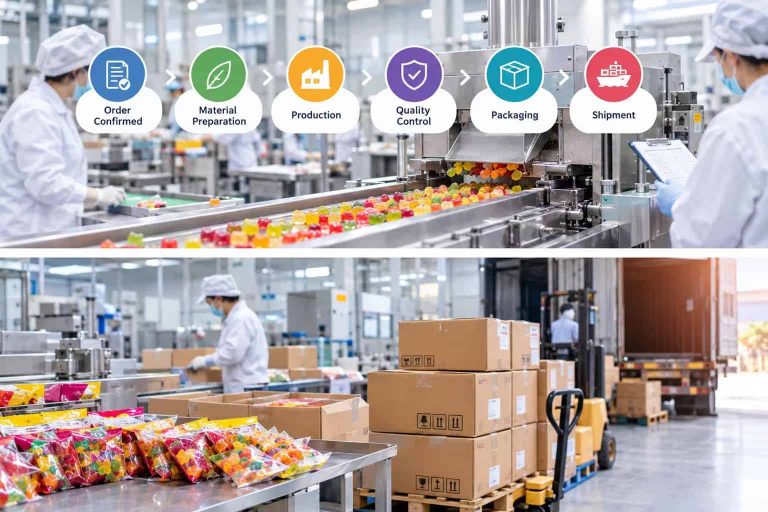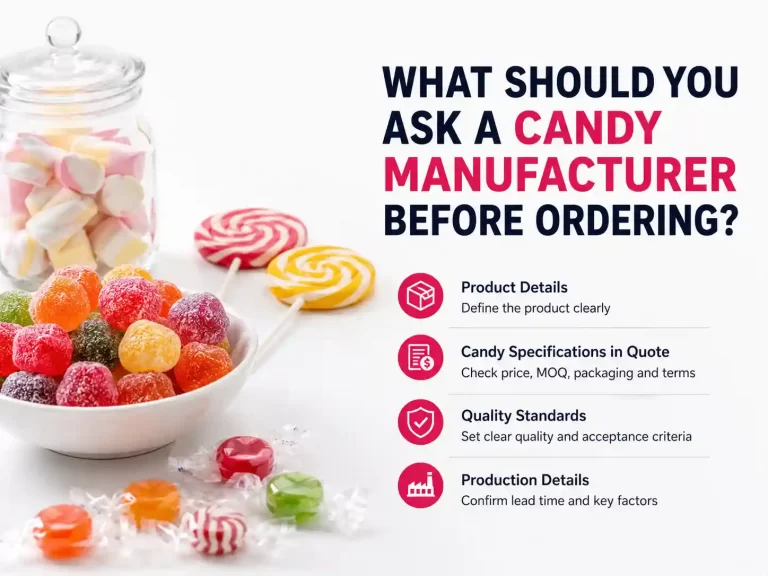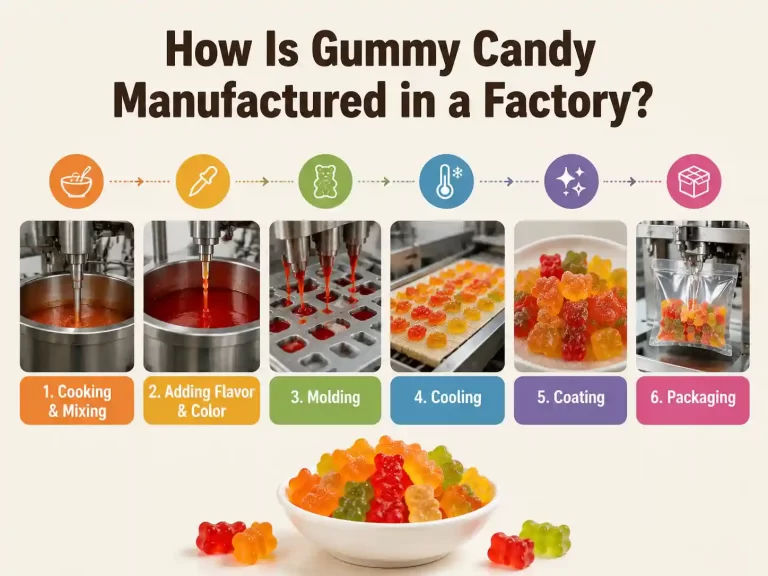

Choosing the right candy manufacturer is an important step for any importer, wholesaler, retailer, or brand. A suitable manufacturer can help a buyer develop the right product, keep quality stable, and support future orders. A poor choice can lead to inconsistent products, missed delivery dates, or extra costs.
CSsweet works with international buyers who need candy products for different markets. We know that buyers often have several factories to compare. A factory may offer a good price, but the price alone cannot show whether the factory is right for a specific project.
A better approach is to look at the factory from several angles. Buyers should first check whether the manufacturer has experience with the product they need. They should then check whether the factory can support the required order volume. After that, buyers should review quality documents and compare the full offer from different manufacturers.
What Should Buyers Look for in a Candy Manufacturer?
The first question is simple: Can this manufacturer make the product I need? Buyers should start with product fit before they compare prices or production volume.
A candy manufacturer may produce many types of candy, but its experience may be stronger in some categories than others. A buyer looking for gummies, hard candy, lollipops, marshmallows, or liquid candy should check whether the factory has real experience with that product type.
Check Experience With Your Product Type
Product experience can affect the development process. A factory that has already produced similar products may understand common problems and production requirements better.
For example, a custom gummy project may involve special shapes, colors, flavors, and textures. A novelty lollipop may require a special mold and a suitable packaging method. These details can affect the development time and final product quality.
| What Buyers Should Check | Why It Matters |
|---|---|
| Product category | Shows whether the factory makes your type of candy |
| Similar products | Shows relevant production experience |
| Custom product experience | Helps with new product development |
| Flavor development | Supports different market preferences |
| Shape development | Helps create unique retail products |
Look at Product Development Support
A good manufacturer should be able to discuss more than an existing product catalog. Buyers may want to change the flavor, color, shape, weight, texture, or package.
A buyer should ask how the factory handles a new product idea. The factory should be able to explain the sample process and tell the buyer which product details need confirmation.
The buyer should also ask whether the factory can make samples before mass production. A sample gives both sides a clear product reference. It can help the buyer check appearance, taste, texture, size, and packaging before approving the order.
CSsweet believes that product development should be a clear process. The buyer should know what can be changed and what information the factory needs before making a sample.
Check Communication During Product Development
Communication is also important at this stage. A factory should understand the buyer’s instructions and ask questions when the requirements are unclear.
The buyer should be able to discuss:
- Product size
- Candy shape
- Flavor
- Color
- Texture
- Weight
- Packaging
- Label information
- Target market
Good communication can make product development easier. It can also reduce the chance of making the wrong sample.
A buyer should therefore evaluate the manufacturer based on how well the factory understands the project, not only on how quickly it provides a quotation.
How Can Buyers Verify a Candy Factory’s Production Capacity?
After confirming that a factory can make the right product, buyers should check whether it can produce the required quantity. Production capacity becomes especially important when an order involves large volumes or regular repeat orders.
A factory may have the right product experience but still have limited production capacity. A buyer should understand the factory’s production setup before making a large commitment.
Check Suitable Production Lines
Buyers should ask whether the factory has suitable production lines for the target product. Different candy categories may need different equipment and production processes.
The buyer does not need to know every technical detail. The main question is whether the factory has the right production setup for the product and expected order volume.
| Capacity Area | What Buyers Should Ask |
| Production lines | How many suitable lines are available? |
| Equipment | Is the equipment suitable for the product? |
| Production shifts | How many shifts can the factory arrange? |
| Packaging lines | Can packaging keep up with production? |
| Storage | Is there enough space for finished products? |
Ask About Lead Time
Production capacity is not only about how many pieces a factory can make. The buyer should also know how long the factory needs to complete an order.
The production lead time can change based on order quantity, product type, packaging, raw materials, and the factory’s current production schedule.
Custom products may require more time because the factory may need to prepare molds, develop samples, confirm packaging, and arrange production.
A buyer can ask:
- What is the normal production lead time?
- How long does a custom order take?
- How long does packaging preparation take?
- Can the factory handle repeat orders?
- What happens if the order quantity increases?
A realistic production schedule is more useful than a large capacity number. Buyers need to know when their products can actually be completed.
Check Future Supply Capacity
Buyers should also think about what happens after the first order.
A new brand may start with a small trial order. If the product performs well, the next order may be much larger. A manufacturer should have enough capacity to support this growth.
For example, a buyer may start with one container or one product line. After the product enters more retail stores, the buyer may need several products and larger monthly volumes.
CSsweet understands that a first order can become a long-term business relationship. Buyers should therefore ask about future supply ability, not only the capacity for one shipment.
What Quality Documents Should Candy Suppliers Provide?
Once a buyer confirms product fit and production capacity, the next question is quality. Buyers need clear information that can help them understand whether the factory and products meet their requirements.
Quality documents can provide useful evidence. The exact documents can differ by product, destination market, and customer requirements.
Review Factory Certifications
Buyers should ask the manufacturer which relevant food safety and factory certifications are available. They should then check the company name, certificate validity, scope, and other important details.
A buyer should not assume that one certificate covers every market. Different countries and customers may have different requirements.
| Document | What It Helps Buyers Understand |
| Food safety certification | How the factory manages food safety |
| Product test report | Testing information for a specific product |
| Product specification | Product characteristics and requirements |
| Ingredient information | Main ingredients and product composition |
| Allergen information | Potential allergen information |
| Packaging specification | Packaging material and package details |
Check Product Specifications
A product specification gives both sides a clear reference. It can include the product name, ingredients, flavor, color, size, weight, packaging, storage conditions, and shelf life.
Buyers should compare the specification with the approved sample. The bulk product should follow the agreed specification.
This step is useful for long-term orders. A clear specification can help both the buyer and manufacturer maintain the same product standard when the order is repeated.
Ask How Quality Is Controlled
Buyers should also understand how the factory checks products during production.
Quality control should not only happen after the product is finished. The factory should have suitable checks for raw materials, production, finished products, and packaging.
The buyer can ask how the factory handles common problems such as:
- Incorrect product size
- Uneven color
- Flavor differences
- Broken candy
- Packaging defects
- Incorrect labels
- Weight differences
CSsweet believes that stable quality comes from the whole production process. A good first sample is important, but consistent bulk production is even more important for a long-term business relationship.
How Can Buyers Compare Different Candy Manufacturers?
After checking product fit, production capacity, and quality information, buyers can compare different manufacturers. This stage should focus on the overall value of the supplier.
Buyers often make one common mistake. They compare only the product price. However, two quotations may not include the same product specifications, packaging, service, or production conditions.
Compare the Same Product Specifications
Before comparing prices, buyers should make sure that all manufacturers are quoting for the same requirements.
The comparison should include product weight, ingredients, flavor, packaging, quantity, and other important specifications.
| Comparison Point | What Buyers Should Confirm |
| Product specification | Are all suppliers quoting the same product? |
| Packaging | Are the package materials and printing the same? |
| MOQ | Does the minimum quantity suit the project? |
| Lead time | Can the supplier meet the required schedule? |
| Customization | Can the supplier meet the product requirements? |
| Export support | Can the factory support international orders? |
A lower unit price may not mean a lower total cost. A buyer should check what is included in each quotation before making a decision.
Compare the Complete Business Offer
The buyer should compare several factors together. Product quality, production ability, communication, packaging, customization, lead time, and export support can all affect the final value.
For example, one manufacturer may offer a lower price but have a longer production time. Another manufacturer may offer a slightly higher price but provide better product development support and more stable delivery.
The buyer should also consider the cost of possible problems. A delayed shipment can affect retail sales. A quality problem can lead to product returns. A packaging problem can create extra costs during transportation.
A simple supplier scorecard can help buyers make a more balanced decision.
| Evaluation Area | Suggested Question |
| Product fit | Can the factory make my required product? |
| Capacity | Can it support my current and future orders? |
| Quality | Can it provide suitable quality evidence? |
| Development | Can it support product customization? |
| Communication | Can the team understand my requirements? |
| Lead time | Can it meet my sales schedule? |
| Total value | Does the complete offer match my budget? |
Consider the Long-Term Relationship
The right candy manufacturer should be able to support more than one order. Buyers should consider how easy it will be to work with the supplier after the first shipment.
A long-term supplier relationship can make repeat orders easier. The manufacturer can understand the buyer’s product specifications, packaging requirements, quality standards, and market needs.
CSsweet works with buyers who are looking for stable candy production and long-term cooperation. We believe that a good supplier relationship should be based on clear product requirements, stable quality, reliable production, and open communication.
Conclusion
Choosing the right candy manufacturer takes more than comparing prices. Buyers should first check whether the factory has the right product experience. They should then verify production capacity, review quality documents, and compare the complete offer from different manufacturers.
A suitable factory should be able to support the buyer’s current project and future growth. It should also provide clear communication and stable product quality.
If you are looking for a candy manufacturer for wholesale, private label, or customized candy products, CSsweet can discuss your requirements with you. You can send us your product idea, target quantity, preferred packaging, flavor, and target market. Our team can review your needs and provide a suitable production solution for your business.