
Lollipops are one of the most popular candy products in the world. They are loved by children and adults because they offer colorful designs, sweet flavors, and fun eating experiences. For candy importers and retailers, understanding how lollipops are made can help them choose the right supplier and develop better products for their markets.
At CSsweet, we produce different types of lollipops for global customers, including traditional round lollipops, heart-shaped lollipops, animal-shaped lollipops, and customized designs. Our factory focuses on stable quality, flexible customization, and reliable production processes to help brands create unique candy products.
The production of lollipops includes several important steps. Manufacturers need to select suitable ingredients, control the cooking process, add flavors and colors, and use proper packaging methods. Each step affects the final quality, appearance, and shelf life of the product.
This article explains the complete lollipop manufacturing process, from ingredients to retail packaging, and helps buyers understand what happens behind every candy product.
What Ingredients Are Used to Make Lollipops?
Lollipops mainly use sugar, glucose syrup, water, flavors, and colors. These basic ingredients create the hard candy texture that consumers recognize. Different markets may have different requirements for ingredients, such as natural colors, special flavors, or sugar-free formulas.
The quality of raw materials directly affects the taste, appearance, and stability of lollipops. A professional candy factory needs to carefully select suppliers and test every ingredient before production.
Common Ingredients in Lollipop Production
| Ingredient | Function in Lollipops |
| Sugar | Provides sweetness and creates the hard candy structure |
| Glucose Syrup | Controls texture and prevents sugar crystallization |
| Water | Helps dissolve sugar during cooking |
| Flavoring | Creates different tastes such as fruit, mint, or milk flavors |
| Food Coloring | Provides attractive colors for different designs |
| Acid Regulators | Balance sweetness and improve flavor performance |
Sugar is the main ingredient in traditional lollipops. During production, sugar is heated and melted into a clear candy syrup. The syrup later becomes a hard and transparent candy after cooling.
Glucose syrup is also important because it improves the texture of lollipops. Without glucose syrup, sugar may easily form crystals, which can make the candy rough and less attractive.
Flavors and colors create product variety. For example, strawberry, orange, grape, and apple flavors are common choices in many markets. Some brands also request special flavors based on local consumer preferences.
How Do Ingredients Affect Lollipop Quality?
| Quality Factor | Related Ingredient |
| Sweetness | Sugar level |
| Candy hardness | Sugar and glucose ratio |
| Flavor strength | Flavoring type and amount |
| Color appearance | Food coloring quality |
| Shelf life | Ingredient quality and moisture control |
CSsweet understands that different customers have different market needs. Some buyers want classic candy flavors, while others need customized formulas for specific regions. Our team works with customers to develop suitable recipes based on their target markets.
Ingredient selection is the first step in making high-quality lollipops. When manufacturers control raw materials well, the production process becomes more stable, and the final products can meet international market standards.
How Is the Lollipop Manufacturing Process Done?
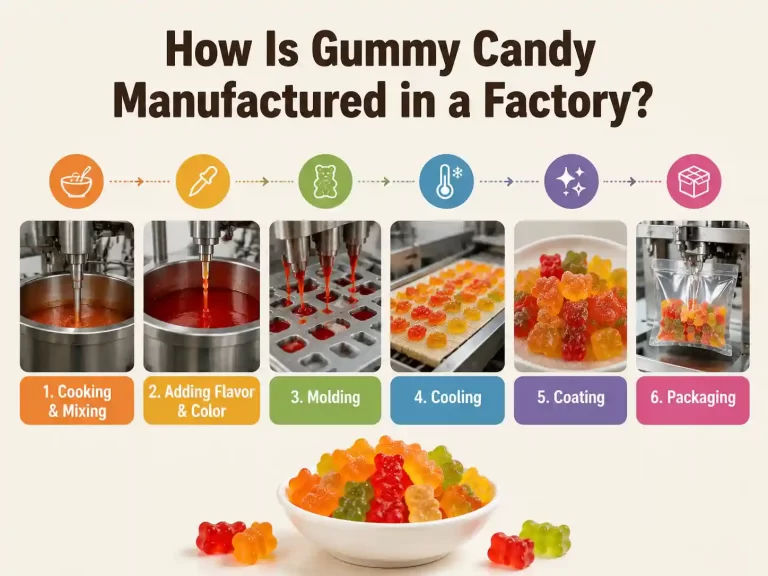
The lollipop manufacturing process includes cooking, mixing, forming, cooling, and quality checking. Every stage requires accurate control because small changes can affect the final candy texture and appearance.
A modern candy factory uses automatic machines to improve production efficiency and maintain consistent quality. Large-scale production allows manufacturers to supply different types of lollipops for supermarkets, wholesalers, and private-label brands.
Main Steps of Lollipop Production
| Production Step | Description |
| Ingredient Mixing | Sugar, glucose syrup, and water are combined |
| Cooking | The mixture is heated to remove moisture |
| Flavor and Color Adding | Flavors and colors are added at the correct temperature |
| Molding | Candy syrup is shaped into different designs |
| Cooling | Products become hard and stable |
| Quality Inspection | Finished products are checked before packaging |
The first step is mixing the ingredients. Workers or automatic systems combine sugar, glucose syrup, and water according to the recipe. The mixture must have the correct ratio to achieve the expected texture.
The second step is cooking. The candy syrup is heated at a high temperature until enough water evaporates. This process creates the hard candy structure. Temperature control is very important because overheating can change the color or taste.
How Are Lollipops Formed?
After cooking, the candy syrup enters the forming stage. Manufacturers can use different molds to create various shapes and sizes.
| Lollipop Type | Common Shapes |
| Classic Lollipop | Round, flat, oval |
| Novelty Lollipop | Animals, hearts, stars |
| Seasonal Lollipop | Halloween, Christmas designs |
| Custom Lollipop | Brand-specific shapes |
The hot candy material is placed into molds before it becomes completely hard. Manufacturers need to work quickly because the syrup loses flexibility as it cools.
After molding, the lollipops enter the cooling process. Cooling allows the candy to become firm and keeps the shape stable. Workers then check the products for problems such as cracks, uneven colors, or incorrect shapes.
CSsweet uses controlled production systems to make sure each batch follows the same quality requirements. Our factory can support different order sizes, from regular wholesale products to customized OEM and private-label lollipops.
The manufacturing process is not only about making candy. It also involves careful control of temperature, timing, and production conditions. These details help create lollipops with good taste, attractive appearance, and stable quality.
How Are Lollipops Flavored and Colored?
Flavors and colors are important parts of lollipop design. They influence how consumers recognize products and how brands create different market positions.
A lollipop with bright colors and attractive flavors can easily catch attention on store shelves. For this reason, many brands focus on customized flavors and unique color combinations when developing new products.
How Are Lollipop Flavors Created?
| Flavor Type | Examples |
| Fruit Flavors | Strawberry, mango, grape, lemon |
| Beverage Flavors | Cola, soda, coffee |
| Fresh Flavors | Mint, watermelon, citrus |
| Special Flavors | Yogurt, milk, mixed fruit |
Manufacturers usually add flavors after the candy syrup reaches the correct temperature. This method helps protect the flavor quality and creates a better taste experience.
Different markets often prefer different flavors. For example, some countries prefer sweet fruit flavors, while others may prefer refreshing flavors such as mint or lemon.
How Are Lollipop Colors Designed?
| Color Source | Application |
| Natural Colors | Used for clean-label products |
| Food Colors | Creates bright and stable colors |
| Multi-Color Design | Creates rainbow or layered effects |
Colors also help customers identify flavors. A red lollipop may represent strawberry, while a yellow lollipop may represent lemon. However, brands can also create unique color systems to match their packaging and marketing strategies.
CSsweet provides customized lollipop solutions for customers who want special designs. We can help develop different flavors, colors, shapes, and packaging styles based on customer requirements.
What Factors Affect Flavor and Color Quality?
Manufacturers need to control several factors:
- The quality of flavor ingredients
- The correct adding time
- The cooking temperature
- The storage conditions
If the temperature is too high, some flavors may lose their original taste. If colors are not mixed properly, the final product may look uneven.
For international buyers, customized lollipops provide a good way to create brand differences. A unique flavor combination or special color design can help products stand out in competitive markets.
How Are Lollipops Packaged for Retail Sales?
Packaging plays an important role in protecting lollipops and attracting consumers. Good packaging prevents moisture damage, keeps products clean, and improves shelf appearance.
For export markets, packaging also needs to support long-distance transportation. Candy manufacturers must consider factors such as humidity, temperature changes, and storage time.
Common Lollipop Packaging Options
| Packaging Type | Features |
| Individual Wrappers | Protect each candy and improve hygiene |
| Transparent Bags | Show product appearance clearly |
| Display Boxes | Suitable for retail shelves |
| Custom Printed Bags | Support brand promotion |
Individual wrapping is one of the most common methods for lollipops. It protects each product and makes it easier for retailers to sell single pieces.
Transparent packaging is popular for novelty lollipops because customers can directly see the shape and color. This packaging style works well for animal-shaped, heart-shaped, and seasonal products.
What Should Export Buyers Consider About Packaging?
| Consideration | Importance |
| Moisture Barrier | Prevents candy from becoming sticky |
| Packaging Strength | Protects products during shipping |
| Design Quality | Improves shelf attraction |
| Label Information | Meets market requirements |
Export packaging needs to provide strong protection. Lollipops can absorb moisture from the environment, especially in hot and humid areas. Therefore, suitable packaging materials are important for maintaining product quality.
CSsweet offers different packaging solutions for global customers. We can provide standard packaging or create customized designs for private-label projects. Our team helps buyers select suitable packaging based on their market, sales channel, and product positioning.
Packaging is the final step before products reach consumers. A good packaging solution protects the candy and also helps brands create stronger market recognition.
Conclusion
Lollipop production includes many important steps, from ingredient selection and candy cooking to flavor design and packaging. Each stage affects the final quality and market performance of the product.
For candy buyers, choosing an experienced manufacturer can help reduce production risks and create better products for customers. CSsweet provides professional lollipop manufacturing services, including OEM and private-label customization for global markets.
If you are looking for a reliable lollipop supplier or want to develop customized lollipop products for your brand, please contact CSsweet. Our team is ready to discuss your product ideas and provide suitable solutions for your market.