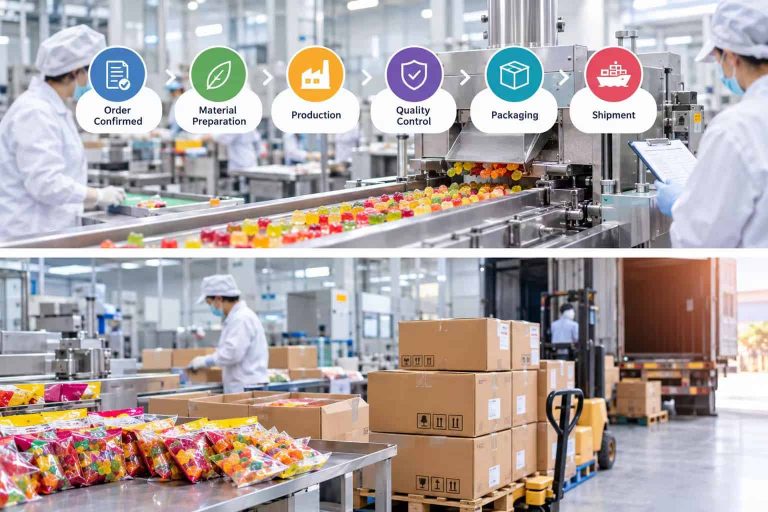

A Valentine’s Day candy order does not succeed because of the candy alone. It succeeds because the sample and the packaging were approved on time. A product that is perfect but stamped on a box that arrives three weeks late will still miss the season.
For seasonal candy, the sampling and packaging stages are where most delays start. Artwork changes, late sample approval, and unclear pack specifications can all push a Valentine’s order past its January shelf date. In many seasonal projects, artwork revisions alone are one of the most common causes of a missed launch.
CSsweet works with international buyers on Valentine’s candy development every season. This guide explains how the sample and packaging approval process works, how long each stage takes, and how buyers can keep the project on schedule.
Why Does Sampling and Packaging Decide the Whole Timeline?
Sampling and packaging sit in the middle of a Valentine’s project, but they control everything around them. Production cannot start without an approved sample. Packing cannot start without approved artwork. Shipping cannot happen until both are finished.
This means the sample and packaging stages are not just quality checks. They are the gates that release the rest of the project.
A buyer who treats sampling and packaging as a quick formality often loses more time than expected. A buyer who plans these stages carefully protects the entire seasonal schedule.
| Stage | What It Releases | What Happens If It Is Late |
| Sample approval | Mass production | Production cannot begin |
| Pack structure confirmation | Artwork design | Design work restarts |
| Artwork approval | Packaging printing | Packing is delayed |
| Packaging printing | Final packing | Goods cannot ship |
CSsweet recommends that buyers treat sample approval and packaging approval as the two most important deadlines in the whole project.
What Is the Realistic Sampling Timeline?
The time needed to produce a sample depends on whether the product uses an existing formula or a new one. A product built on an existing formula and mold moves faster than one that needs a new recipe, a new shape, or a new filling.
| Sample Type | Typical Time | Notes |
| Existing formula and mold | 7–10 days | Fastest route; little development needed |
| Existing formula, new color or flavor | 2–3 weeks | Requires a small trial |
| New flavor or texture | 3–4 weeks | Needs development and testing |
| New custom mold | 25–30 days | Mold development plus sample |
| Complex filled or coated product | 4–6 weeks | Multiple test rounds may be needed |
These figures assume the buyer has provided a complete brief. If the brief is unclear, the factory may need to ask questions before it can even start, which adds time.
Buyers should also plan for more than one sample round. A new product often needs one adjustment after the first sample, so the realistic timeline should include room for a second round.
What a Complete Sample Brief Should Include
A sample can only answer the question it was given. The buyer should provide the following before sampling begins.
| Brief Item | What to Provide |
| Product type | Gummy, hard candy, lollipop, marshmallow, jelly, or chocolate |
| Shape | Standard or custom, with a reference image or drawing |
| Size and weight | Target piece size and weight |
| Flavor | Desired flavors and how many |
| Color | Red, pink, or a custom palette |
| Texture | Soft, chewy, firm, crisp, filled, or coated |
| Reference product | An existing product that is close to the goal |
| Approval criteria | What the buyer will check to approve the sample |
The reference product and the approval criteria are often the two items buyers forget, and they are the two that save the most time.
CSsweet recommends that buyers send one clear sample brief with a clear approval target, rather than a long list of open questions.
How Many Sample Rounds Should Buyers Expect?
The number of sample rounds depends on how much the product differs from an existing one.
| Project Type | Typical Sample Rounds |
| Private label on an existing product | 1 round |
| Existing product, new color or flavor | 1–2 rounds |
| New shape with existing formula | 1–2 rounds |
| New formula or texture | 2–3 rounds |
| Complex filled or coated product | 2–4 rounds |
Each round adds time. A buyer planning a Valentine’s order should assume at least one adjustment round and build it into the schedule, rather than expect the first sample to be perfect.
When Should Packaging Work Begin?
Packaging is the part of the project that most often delays a seasonal order. The reason is that packaging depends on decisions that must be made in the right order.
Artwork should not begin until the pack structure is confirmed. The pack structure includes the format, size, label panel, and how the product is packed. If design work starts before the structure is fixed, the dieline can change, the label may need resizing, and the whole design may need to be redone.
| Packaging Stage | What Must Be Confirmed First |
| Pack structure | Format, size, and packing method |
| Dieline | Finished pack structure and dimensions |
| Artwork design | Dieline, language, and required claims |
| Compliance check | Market labels, barcode, allergens, and marks |
| Final print proof | All artwork corrections |
| Printing | Final approved artwork |
The correct order is: confirm the pack structure first, then create the dieline, then design the artwork, then check compliance, then approve the print proof, and only then print.
Why Artwork Approval Is the Most Dangerous Stage
Artwork is dangerous because it is the stage where several teams are involved. The buyer’s design team, the buyer’s compliance team, and the factory’s printing team all have to agree.
Common artwork problems in seasonal candy include:
- Allergen information not correctly highlighted
- Barcode errors or wrong placement
- Translation errors in the target language
- Missing required market marks
- Late design changes after the dieline was fixed
Each of these problems can send the artwork back for another round. For a seasonal order, even one extra artwork round can be enough to miss the shipping window.
CSsweet recommends that buyers confirm the market requirements and the approval owner before design starts, so the artwork moves through one clear process.
How Long Does Artwork and Printing Take?
Once the pack structure and dieline are fixed, artwork and printing follow a fairly predictable path.
| Step | Typical Time | Key Point |
| Artwork design | 1–2 weeks | Depends on the number of SKUs |
| Buyer review and approval | 1 week | Keep revisions to a minimum |
| Compliance check | 2–5 days | Confirm market requirements early |
| Print proof approval | 2–3 days | Final check before printing |
| Printing | 1–2 weeks | Starts only after final approval |
Added together, artwork and printing usually need about 3–5 weeks from the start of design to finished printed packaging. This is why packaging must be planned early: it can take longer than the candy itself.
If the buyer needs multiple SKUs or several languages, the artwork time can extend further. Buyers should plan each additional SKU as extra time, not as a small add-on.
Keep Packaging and Candy Sampling in Parallel
One way to save time is to run product sampling and packaging planning in parallel. The candy sample and the pack structure can be developed at the same time, as long as the artwork itself waits for the confirmed dieline.
| Activity | Can Run in Parallel With |
| Product sample | Pack structure planning |
| Flavor and shape trials | Packaging format selection |
| Sample approval | Dieline preparation |
| — | Artwork design (after dieline) |
This parallel approach shortens the total timeline without creating rework, because the two tracks only merge once the pack structure is fixed.
How Should Buyers Build the Approval Timeline?
A clear approval timeline prevents last-minute delays. Buyers should work backward from the delivery date and set a deadline for each approval step.
| Milestone | Buyer Action | Purpose |
| Brief issued | Send full product and packaging brief | Allows sampling to start |
| Sample approved | Review and confirm the sample | Releases production planning |
| Pack structure fixed | Confirm format, size, and packing | Allows dieline creation |
| Artwork approved | Confirm final design | Allows printing |
| Print proof approved | Confirm final print files | Allows packaging production |
| Final order approved | Review all details in writing | Releases production |
Each milestone should have a named owner on the buyer side. Delays often come from internal handoffs rather than from the factory, so a single responsible contact keeps the project moving.
What Can Delay a Valentine’s Order?
Understanding the common delays helps buyers avoid them. Most seasonal candy delays come from a small number of causes.
| Delay Cause | How Buyers Can Prevent It |
| Incomplete brief | Send a full brief before sampling |
| Late sample approval | Set a fixed sample deadline |
| Artwork changes after dieline | Freeze the pack structure before design |
| Missing compliance details | Confirm market rules early |
| Multiple languages | Plan extra artwork time |
| Internal delays | Assign one approval owner |
| Too many sample rounds | Define approval criteria up front |
CSsweet recommends that buyers review this list before starting a Valentine’s project and confirm which risks apply to their order.
Conclusion
Sampling and packaging approval decide whether a Valentine’s order reaches the shelf on time. The sample releases production. The pack structure releases artwork. The artwork releases printing. Each stage depends on the one before it.
Buyers should plan samples early, expect at least one adjustment round, and start packaging planning at the same time as product sampling. They should also freeze the pack structure before design begins and assign one clear approval owner.
For a fast, low-risk alternative to a fully custom project, buyers can also consider an existing product with a Valentine’s shape, color, or packaging. You can review our guide to customizing candy for retail markets to compare development routes.
CSsweet works with buyers who need wholesale, private label, and customized Valentine’s candy products. If you have a product idea, a sample target, a packaging direction, or a delivery date, you can send the details to CSsweet. Our team can review your project and help you build a clear sample and packaging timeline for the Valentine’s season.