
When a candy buyer places an order, the work does not stop after the payment or order confirmation. The factory still needs to review the order, prepare materials, arrange production, check product quality, complete packaging, and prepare the goods for shipment.
For overseas buyers, this process is important because each step can affect product quality, delivery time, and the final cost. A clear production process also helps buyers plan their inventory and sales activities.
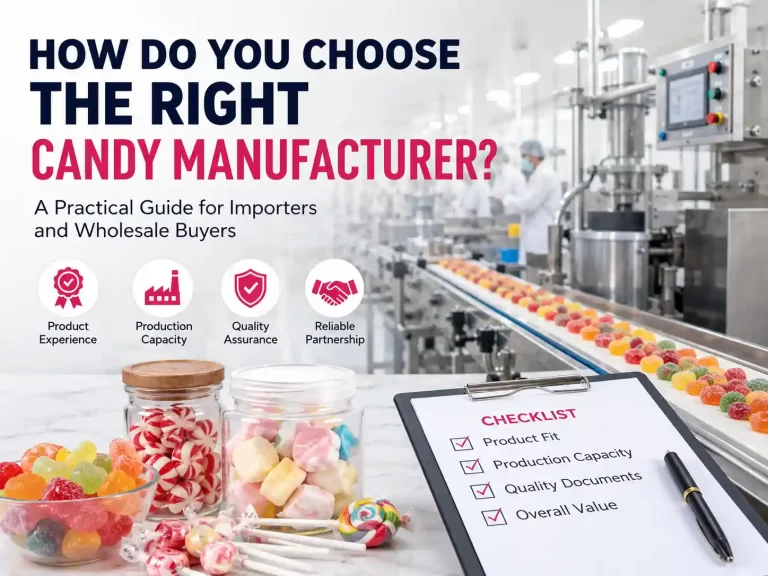
Before placing an order, choosing the right candy manufacturer is an important step for overseas buyers. At CSsweet, we work with buyers from different markets and support wholesale, private label, and custom candy orders. After an order is confirmed, our team follows a clear process from order review to shipment.
Understanding what happens after an order is placed can help buyers know what to expect and communicate more effectively with their candy factory.
What Happens After a Candy Order Is Confirmed?
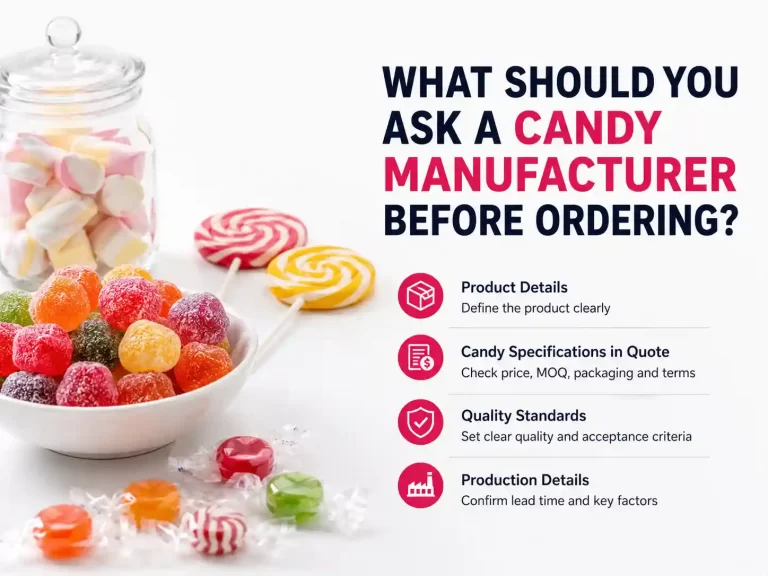
After a candy order is confirmed, the factory first reviews the order details. This step makes sure that the buyer and factory have the same understanding of the order before production starts. Buyers should also know what information needs to be confirmed before placing an order.
The factory checks the product type, flavor, color, shape, quantity, packaging, and delivery requirements. For custom candy orders, the team also checks the approved samples, artwork, and other product details.
How Does the Factory Review the Order?
The production team normally checks several important parts of the order.
| Order Detail | What the Factory Checks |
| Candy type | Confirms the correct product and production method |
| Flavor and color | Confirms the approved product specifications |
| Shape and size | Checks the product design and dimensions |
| Order quantity | Confirms the production volume |
| Packaging | Checks bags, boxes, labels, and artwork |
| Delivery date | Confirms the planned production schedule |
This review is especially important for private label and OEM orders. A small mistake in packaging artwork or product specifications can affect a large production run.
The factory also checks whether all required materials are available. Ingredients, packaging materials, cartons, labels, and other production materials may need to be prepared before the production line starts.
How Is the Production Plan Created?
After the order details are confirmed, the factory creates a production plan.
The production team needs to decide when to prepare the materials, which equipment to use, and when to start each production stage.
| Planning Step | Main Purpose |
| Material preparation | Make sure required materials are ready |
| Equipment planning | Select the suitable production equipment |
| Production scheduling | Set the production sequence |
| Quality planning | Set quality inspection points |
| Packaging planning | Arrange the packing process |
Custom orders may need more preparation than standard products. A new candy shape may require a custom mold. A new package may require printing and material preparation. A special flavor may also require sample testing and approval.
At CSsweet, we communicate with buyers when we need to confirm product or packaging details. Clear communication at this stage helps reduce mistakes during mass production.
The factory does not simply start production as soon as the order arrives. The team first makes sure that the important details are correct and ready for production.
How Long Does Candy Production Usually Take?
Candy production time can vary from one order to another. The product type, order quantity, packaging, customization, and material preparation can all affect the schedule.
A standard candy product with existing packaging may move faster than a fully customized product. A custom candy order may need extra time for mold development, sample approval, artwork confirmation, and packaging production.
What Affects Candy Production Time?
Several factors can change the production schedule.
| Factor | How It Affects Production |
| Product type | Different candies need different production methods |
| Order quantity | Larger orders may need more production time |
| Custom shape | New molds may require extra preparation |
| Custom flavor | New flavors may need testing and approval |
| Packaging | Custom printing may require additional time |
| Material availability | Special materials may need more preparation |
For example, a buyer who orders a standard gummy product with existing packaging may have a shorter preparation period.
A buyer who orders a new gummy shape with custom packaging may need more time before mass production can begin.
Why Can Custom Candy Take Longer?
Custom candy involves more steps than standard production.
The buyer may first provide an idea or design. The factory then needs to review the idea and check whether it can be produced.
The process may include:
Product idea → Design confirmation → Mold development → Sample production → Sample approval → Mass production
Packaging can follow a similar process:
Artwork → Design confirmation → Printing → Packaging inspection → Mass packing
The exact time depends on the project.
Buyers should also consider shipping time when planning an order. International transportation can take additional time after production is complete.
Seasonal products need even more careful planning. Halloween, Christmas, and other seasonal products often have fixed sales periods. Buyers need to place orders early enough to allow time for production, packaging, shipping, customs clearance, and local delivery.
At CSsweet, we understand that delivery timing is important for overseas buyers. Buyers may need to prepare warehouses, retail displays, marketing campaigns, and sales plans before the products arrive.
For this reason, buyers should discuss the expected production schedule with the factory before placing an order.
How Do Candy Factories Control Product Quality?
Quality control continues throughout the production process. A factory should not wait until the end of production to check the finished candy.
Quality checks can take place before production, during production, and after production. These checks help the factory keep the product close to the approved specifications.
How Are Raw Materials Checked?
The quality process starts with the raw materials.
The factory checks the materials before they enter production. The team may check the material type, condition, and other requirements based on the product specifications.
This step is important because the quality of the raw materials can affect the final candy.
For example, changes in ingredients can affect taste, texture, color, or appearance.
What Quality Checks Happen During Production?
During production, workers and quality teams check the candy at different stages.
Common checks can include:
- candy shape
- product size
- color
- texture
- flavor
- weight
- packaging condition
| Production Check | What It Helps Control |
| Shape and size | Keeps products consistent |
| Color | Helps maintain the approved appearance |
| Texture | Helps maintain the expected eating experience |
| Weight | Keeps product weight within requirements |
| Flavor | Checks product taste |
| Packaging | Checks sealing and appearance |
Different candy types may require different quality checks.
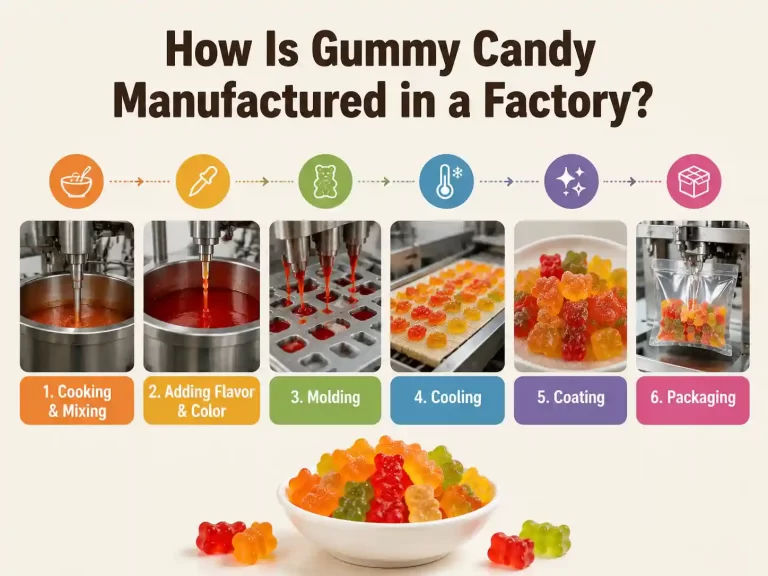
For example, hard candy may need close attention to shape, clarity, weight, and packaging. Gummy candy may require checks for texture, shape, color, and moisture. Marshmallow products may need careful control of softness, shape, and packaging.
How Is the Finished Candy Inspected?
After production is completed, the factory checks the finished products.
The team may inspect samples from the production batch and check the packaging and cartons before shipment.
| Final Check | Purpose |
| Product appearance | Checks shape, color, and overall condition |
| Product weight | Confirms the required weight |
| Packaging | Checks bags, boxes, and seals |
| Quantity | Confirms the packed quantity |
| Cartons | Checks outer carton condition |
At CSsweet, our quality team checks finished products before shipment. The goal is to make sure the products meet the agreed requirements and are ready for export.
For buyers, quality control is important because a large order represents more than the cost of the goods. The products also represent the buyer’s brand in the local market.
Consistent quality can help reduce complaints, returns, and problems after the products reach retailers or consumers.
How Is Candy Prepared for Shipment?
After production and quality checks are complete, the factory prepares the order for shipment.
The goods need to be packed correctly and prepared for international transportation. The factory also needs to check the cartons, shipping details, and required export documents.
How Is Candy Packed for Export?
Candy packaging needs to protect the product during handling and transportation.
The factory may use individual wrappers, bags, boxes, inner cartons, and outer export cartons depending on the product and buyer requirements.
The packaging stage normally includes several checks.
| Packaging Check | Why It Matters |
| Inner package | Protects the candy |
| Outer package | Protects products during handling |
| Carton quantity | Matches the order requirements |
| Labels | Provides required product information |
| Carton condition | Helps reduce damage during shipping |
Packaging is especially important for international orders because the products may travel long distances before reaching the buyer.
Temperature and humidity can also affect some candy products. Proper packaging can help reduce problems caused by the shipping environment.
What Happens Before the Goods Leave the Factory?
Before shipment, the factory completes a final check of the order.
The team may confirm:
- total carton quantity
- product quantity
- packaging condition
- carton marks
- shipping information
- required documents
- loading schedule
After the final checks, the goods can be loaded for transportation.
| Shipment Stage | Main Activity |
| Final inspection | Check products and packaging |
| Carton preparation | Organize goods for loading |
| Document preparation | Prepare required export documents |
| Loading | Load goods safely |
| Shipment | Send goods to the agreed destination |
For overseas buyers, this is the point where the production process moves into international logistics.
The buyer should confirm the shipping method, destination, loading date, and required documents with the supplier before shipment.
At CSsweet, we support buyers through the production and export process. Our goal is to make communication clear from the time an order is confirmed until the goods are ready for shipment.
Conclusion
A candy order involves much more than simply producing and packing the products. After an order is confirmed, the factory reviews the specifications, prepares materials, creates a production plan, manufactures the candy, checks quality, completes packaging, and prepares the goods for shipment.
Each stage has a different purpose. Good order management can help reduce production mistakes, quality problems, and delivery risks.
For overseas buyers, understanding this process can also make communication with a candy factory easier. Buyers can ask the right questions, plan their sales schedule, and prepare for shipment in advance.
At CSsweet, we support wholesale, private label, and custom candy orders from production to export. If you are planning a new candy project, contact CSsweet to discuss your product requirements, packaging needs, order quantity, and delivery plan. You can also request samples before placing a larger order.